

News

Sacred Sound: The Power of Gurbani in Everyday Life
In a noisy world full of distractions, stress, and overthinking, the sound of Gurbani offers something rare — stillness. Whether you’re listening to Japji Sahib at dawn, playing Rehras Sahib on your evening commute, or softly whispering Waheguru while walking — Gurbani isn’t just a prayer. It’s a vibration that realigns the mind, body, and soul. This blog explores how the sacred sound of Gurbani can be part of your everyday life, how it affects us deeply, and how you can build a personal practice that brings daily calm, clarity, and connection. 1. What Makes Gurbani So Powerful? Gurbani isn’t ordinary poetry or scripture. It’s Shabad Guru — the divine word that carries Naam (spiritual essence). Every syllable has rhythm, energy, and intention. When recited or listened to with love, it’s not just heard — it’s absorbed. Gurbani is designed to: Calm the mind and remove mental noise Guide thoughts towards truth and compassion Uplift the soul by connecting it to Waheguru Carry healing vibrations that impact even on a cellular level That’s why even hearing Gurbani — without fully understanding it — still touches something within. 2. Bringing Gurbani Into Daily Life You don’t need hours of free time or a perfect setup. Just a few intentional moments can change the energy of your day. Here are a few simple ways to invite Gurbani into your daily rhythm: 🎧 While commuting: Listen to Japji Sahib, Asa Di Vaar, or soothing Kirtan 🕯️ During chores: Let Rehras Sahib play while you tidy up or cook 🌿 On walks: Whisper Waheguru or pause to reflect on one line from Nitnem 🌙 Before bed: End the day with Kirtan Sohila or soft Simran 🛋️ During stillness: Just sit, breathe, and let one Shabad play gently Over time, Gurbani becomes the backdrop to your day — not just a task on a list. 3. The Science of Sound and Healing Modern science is catching up with what the Gurus already taught — sound has power. Studies show that chanting, vibration, and sacred frequencies can: Reduce anxiety and stress Improve focus and emotional balance Activate the parasympathetic nervous system (rest, repair, restore) Influence water, plants — and yes, our own cells Gurbani is the ultimate spiritual sound therapy — no tech, no trend, just timeless truth. 4. How to Build a Gurbani Routine That Sticks Start small, stay consistent. Here’s how to create a practice that works: 📖 Keep your Gutka Sahib close – bedside, desk, or prayer corner 📱 Use a simple playlist or app – so you don’t have to search daily 💡 Set reminders – for 5-minute Gurbani breaks during the day 🙏 Create a sacred space – even if it’s just a cushion and Rumala Sahib 👨👩👧 Get the family involved – listen together while driving or during dinner prep You’ll be surprised how quickly Gurbani becomes something you crave, not just remember. 5. Support Tools for Your Gurbani Journey At Akaal Accessories, we offer sacred tools to support your daily connection with the Shabad: Gutke Sahib in both English and Punjabi, perfect for daily Nitnem or Simran Mala beads attached to Kara – a subtle yet powerful way to stay present in Waheguru's name Chaur Sahib – crafted for respectful daily use, whether at home or during Paath Each item is made with love and intention — to bring Gurbani closer, in every moment of your day. Final Thoughts: Let the Shabad Guide You Gurbani isn’t just something you read or listen to — it’s something that reads you back. It reveals the truth in your heart, quiets the storms in your mind, and fills your day with spiritual fragrance. So wherever you are, whatever you’re facing, press play… and let the Shabad do its work.
Learn more
Sikh Baby Naming Ceremony (Naam Karan): What It Means and How to Prepare
The arrival of a new life is one of the most beautiful moments in any family. In Sikhism, this moment is honoured with a deeply spiritual ceremony known as Naam Karan — the official naming of a newborn, conducted in the presence of the Guru Granth Sahib Ji. More than just a cultural tradition, Naam Karan is a sacred opportunity to start a child's life with the blessings and guidance of the Guru. In this post, we'll walk you through what Naam Karan is, how the ceremony works, and how families can prepare meaningfully — from spiritual intention to thoughtful gifts. 1. What Is Naam Karan? Naam Karan means “naming through the Name.” It is the formal Sikh baby naming ceremony, usually held at the Gurdwara within the first few weeks of the baby's birth. Unlike secular naming rituals, Naam Karan is about much more than choosing a name — it's about aligning the child's identity with the divine wisdom of the Guru. During this ceremony, the Guru Granth Sahib Ji is opened at random, and the first letter of the hukamnama (verse revealed on that day) becomes the first letter of the child's name. 2. The Naam Karan Ceremony Step-by-Step Here's how a traditional Naam Karan unfolds: Family gathers at the Gurdwara, or in some cases, at home with Guru Granth Sahib Ji present Kirtan is performed, creating a peaceful and joyful atmosphere Ardas (prayer) is offered for the child's well-being, health, and connection to Sikhi The Granthi opens the Guru Granth Sahib Ji, and a hukamnama is read aloud The first letter of the first word of the hukam is used to choose the baby's name The baby is formally introduced to the Sangat with their new name Karah Parshad is distributed to all attending A Langar or small family meal often follows 3. Choosing a Name: What It Represents Sikh names often end in: Kaur for girls — meaning “princess” Singh for boys — meaning “lion” These names signify equality, dignity, and strength. The chosen first name — based on the hukamnama — usually reflects divine virtues like peace, light, truth, or service. For example: A name beginning with “S” could be Simranpreet Kaur or Satdeep Singh It's not just a name — it's a spiritual guide for life. 4. How to Prepare for Naam Karan Whether it's your first child or your third, preparing for Naam Karan is a special opportunity to slow down, connect to Sikhi, and create lasting memories. Here's how you can prepare: Bring fresh, clean Rumalay Sahib for Guru Granth Sahib Ji Dress your child in soft, respectful, clean clothing Bring Karah Parshad ingredients or arrange Langar Seva Keep a small notebook to write down the Hukamnama and meaning Involve older siblings to help build connection and pride 5. Gifts That Grow With the Child The most meaningful gifts are those that last beyond the moment — items that carry blessings, memories, and spiritual depth. When gifting for a Naam Karan, think beyond baby clothes and toys. Choose something that connects the child to Sikhi, something they'll treasure years from now. Consider: A baby-sized Kara – A symbol of strength they'll grow into A personalized plaque with their name and hukamnama – A timeless keepsake A soft Rumala set to honour their connection to Gurbani A mini Gutka Sahib – Wrapped carefully and respectfully A memory box – For their name card, Ardas slip, or first Dastaar These gifts are more than items — they're silent prayers the child will carry for life. Explore our Amrit Sanchar Gifts collection for meaningful, faith-rooted pieces chosen with care for this sacred occasion. Final Thoughts: A Name With a Blessing Naam Karan is more than a celebration — it's a prayer. A chance to welcome a child into the world not just with joy, but with Gurmat guidance. It reminds us that identity is sacred, and names carry power when rooted in the divine word. So whether you're a parent, grandparent, or friend attending a Naam Karan, take a moment to reflect: This isn't just a new name — it's a soul beginning its journey with Waheguru.
Learn more
The Khanda: Meaning Behind the Symbol That Unites Sikhs Worldwide
You’ve seen it waving on a saffron flag outside a Gurdwara. You’ve worn it on a Kara, seen it on a Kirpan, or maybe displayed it proudly in your home. The Khanda is the most iconic symbol of Sikhism — yet many people don’t know what it truly means or how powerfully it represents the core values of the faith. In this post, we break down the components of the Khanda, what they stand for, and how this powerful emblem unites Sikhs around the globe. 1. What Is the Khanda? The Khanda is the official symbol of Sikhism. It represents spiritual strength, divine unity, justice, and balance. The symbol is made up of three key elements, each holding deep meaning: 🗡️ The Central Khanda (Double-Edged Sword) Sits vertically in the centre Represents divine knowledge that cuts through illusion and ego Symbol of spiritual power and the ability to distinguish truth from falsehood 🔄 The Chakkar (Circular Disc) The round, circular element behind the Khanda Symbolises eternity, unity, and the oneness of Waheguru — no beginning, no end Also represents the Sikh belief in equality and interconnectedness of all humanity ⚔️ The Two Kirpans (Crossed Swords) Flanking the Khanda on both sides Represent the Sikh doctrine of Miri-Piri: Miri: Temporal authority (worldly justice) Piri: Spiritual authority (connection with the divine) Emphasises that Sikhs live with both earthly responsibility and spiritual depth 2. Where the Khanda Appears The Khanda is found in many sacred and everyday spaces, including: Nishan Sahib: The saffron flag that flies outside every Gurdwara Kirpans: Often engraved onto the blade or scabbard Karas: Symbolically etched onto the steel Home décor: Used respectfully as wall art or frames Jewellery: Worn as pendants, rings, or bracelet charms Ceremonial Rumalay and Shastars Wherever it appears, it carries dignity and power — and must be treated with reverence. 3. Respecting the Khanda Because of its sacred meaning, the Khanda should never be used casually or as a fashion trend. To respectfully display or wear the Khanda: Keep it clean and in good condition Avoid placing it on the floor or in inappropriate settings Use it as a reminder of your commitment to righteousness and seva Educate others when asked — it’s an opportunity to share the beauty of Sikhism Final Thoughts: A Symbol That Speaks Without Words The Khanda is more than a logo or a symbol — it is a call to action. A reminder to live with shakti (power), prem (love), nimrata (humility), and seva (service). To wear it, to display it, or to understand it is to connect with the essence of Sikhism — a faith that values bravery, compassion, and spiritual sovereignty.
Learn more
Sikh Women and Shastars: Breaking Stereotypes with Strength & Spirit
1. The Legacy of Mai Bhago: A Sikh Warrior Queen One of the earliest and most revered examples of Sikh female strength is Mai Bhago, a fearless warrior-saint from the time of Guru Gobind Singh Ji. She led 40 Sikh soldiers back into battle after they had deserted the Guru Fought with bravery at the Battle of Muktsar Sahib Lived out her days as a devout saint-soldier, carrying arms and defending righteousness Mai Bhago’s legacy lives on — proving that the Kirpan is not limited to one gender. It is a symbol of justice, not aggression — and courage, not ego. 2. Modern Sikh Women Embracing the Kirpan Today, more Sikh women around the world are embracing the Kirpan and Shastars with pride and purpose. Whether they are: Amritdhari (initiated) women Practitioners of Gatka (Sikh martial arts) Community leaders and sevadars Everyday mothers, daughters, students, and professionals They are reclaiming what was always theirs: the right to walk with the same spiritual and warrior identity bestowed by Guru Gobind Singh Ji. 3. Breaking Cultural Norms with Grace In many societies — even within parts of the Sikh community — women are still expected to be soft-spoken, modest, and passive. But Sikh women show that: Strength is not masculine Shastars are sacred, not aggressive Power and humility can coexist Wearing a Kirpan as a woman is a bold yet spiritual act — a declaration that you stand for protection, peace, and principle. 4. Raising the Next Generation of Warrior Queens Want to empower a young girl to own her strength and Sikhi? Here's how: Teach her the stories of Mai Bhago, Mata Sahib Kaur, and modern-day women warriors Encourage her to participate in Gatka or Seva Gift her a starter Kirpan, engraved Kara, or Gutka Sahib Most importantly, model strength and Simran in your own life Final Thoughts: Grace in the Grip of a Kirpan Sikh women do not need permission to be powerful. That power already exists within — in the way they speak, serve, defend, and uplift. The Kirpan simply reflects that truth to the world. To every sister, daughter, mother, and friend reading this:You are not just worthy of the Shastar — you are born to carry it.
Learn more
Why the Dastaar Is a Crown: Unpacking the Power of Sikh Identity
The Dastaar, or Sikh turban, is not just cloth wrapped around the head — it is a crown. It’s a daily declaration of sovereignty, discipline, courage, and spiritual connection. For centuries, Sikhs have worn the Dastaar with honour, even in the face of oppression, discrimination, or misunderstanding. But behind every Dastaar is a powerful story — of faith, resilience, and pride. This post explores why the Dastaar is one of the most powerful symbols of Sikh identity — and why it continues to inspire generations today. 1. More Than Fabric: A Spiritual Crown The Dastaar holds deep significance in Sikhism. Guru Gobind Singh Ji referred to it as the "Dastar-e-Fateh" — the turban of victory. It is: A symbol of equality (everyone, regardless of background, is worthy of respect) A marker of identity (distinguishing Sikhs as protectors and spiritual warriors) A reminder of discipline (to live with integrity and responsibility) For many, tying the turban is a sacred act — one that connects the individual to their Guru, their roots, and their higher self. 2. A Legacy of Courage Throughout history, the Dastaar has been a target — and a symbol of resistance. Sikh men and women have refused to remove it, even under the threat of violence or persecution. From the Mughal era, when Sikhs were hunted, to modern workplaces and classrooms, where misunderstandings still exist, the Dastaar has remained a defiant symbol of dignity and self-respect. Wearing it boldly says: “I will not blend in. I will stand for justice, even when it’s hard.” 3. Style, Colour, and Expression Though it holds deep meaning, the Dastaar is also personal and expressive. Every Sikh brings their own flavour and feeling to it. Colours may reflect moods, occasions, or tradition: Navy & orange: Warrior spirit White: Peace and purity Black: Strength and remembrance Brights: Celebration and confidence Styles vary too: Dumalla, Gol Dastaar, Double Patti, Keski Elegant Dastaar styles for Sikh women At Akaal Accessories, we offer Shingars, pins, and adornments to enhance Dastaar dignity — whether for everyday wear or grand occasions. 4. The Challenges and the Pride Let’s be honest — wearing a turban in public can be hard. Especially for young Sikhs navigating school, sports, or social media. But that difficulty is part of what makes it so powerful. To wear the Dastaar is to say: “I carry my history.”“I choose visibility over comfort.”“I belong to something bigger than me.” And when that realization sinks in — the pride is unmatched. 5. For the Next Generation Dastar Bandi ceremonies, where a child ties their Dastaar for the first time, are crucial. They pass down pride, tradition, and strength. If you’re a parent or mentor: Normalize the turban with love and encouragement Share stories of Sikh heroes who wore it proudly Let your child choose their turban colours and materials Teach them it’s not a restriction — it’s a gift Final Thoughts: Walk Tall in Your Crown The world may not always understand the Dastaar. But that’s not why we wear it. We wear it for the Guru. For our ancestors. For our values. For ourselves. It is a symbol of power — not power over others, but power over fear, doubt, and ego. So wear it boldly. Walk with your head high.You’re not just tying a turban — you’re wearing your crown.
Learn more
Celebrating Sikh Identity Through Business: Akaal Accessories’ Unique Exhibit of Faith and Culture
In today’s evolving commercial landscape, cultural identity and spiritual expression are increasingly reflected in modern enterprise. Akaal Accessories, a purpose-driven e-commerce platform, exemplifies how Sikh businesses can combine tradition with innovation. At akaalaccessories.co.uk, the goal is to exhibit the depth, richness, and relevance of the Sikh faith through every product and customer experience. A Purpose-Led Sikh Business Akaal Accessories was founded with a clear mission: to serve the global Sikh community through high-quality products that support both religious practice and cultural heritage. As a proudly Sikh-run business, the company is rooted in the values of service, integrity, and collective empowerment. Following the principle of Dasvandh—donating a portion of earnings to charitable causes—Akaal Accessories ensures that each transaction contributes directly to initiatives that support the wider community. The brand reflects a growing movement of businesses that prioritise both purpose and impact. Exhibiting Sikh Heritage Through Meaningful Products Akaal Accessories offers more than just religious goods. It provides a curated collection that exhibits Sikh identity, craftsmanship, and devotion. Each item is chosen for its cultural and spiritual significance, helping individuals connect more deeply with their faith. The product range includes: Kirpans and Shastars – Hand-forged ceremonial and practical blades that embody the Sikh martial tradition. Gutkas and Nitnem Prayer Books – Durable, easy-to-read collections of Sikh scripture for daily recitation. Khanda Pendants and Sikh Jewellery – Symbolic designs in stainless steel and silver, reflecting Sikh values with elegance. Kara (Steel Bracelets) – Traditional Sikh bracelets crafted from high-grade steel in various finishes and sizes. Gift Sets and Custom Bundles – Curated collections perfect for personal milestones or meaningful gifts Supporting Sikh Businesses and Community Engagement Akaal Accessories is committed to uplifting and promoting other Sikh businesses. The brand embraces a collaborative approach, seeking opportunities to work alongside like-minded entrepreneurs and support wider community initiatives. Whether through partnerships, online campaigns, or participation in local Sikh exhibits, Akaal Accessories actively engages with the community to ensure representation and cultural visibility. Conclusion As the number of impactful Sikh businesses continues to grow, Akaal Accessories remains a trusted name—known for its quality products, ethical values, and community involvement. By blending traditional spirituality with modern commerce, the brand offers a living exhibit of Sikh culture. Visit akaalaccessories.co.uk to explore a collection designed to honour, reflect, and celebrate Sikh identity.
Learn more
What Makes a Kirpan Legal? Understanding Your Rights in the UK
For Sikhs, the kirpan is not a weapon — it is a sacred article of faith. However, in today's security-conscious world, misunderstandings can arise, especially in public places like airports, schools, or workplaces. Thankfully, in the UK, the right to carry a kirpan is legally protected — but it's important to understand how those rights work and how to wear the kirpan responsibly and respectfully. This blog breaks down the UK laws around the kirpan, your legal rights, and how to educate others with calm confidence. 1. What Is the Kirpan and Why Is It Worn? The Kirpan is one of the Five Ks (Panj Kakaar), given by Guru Gobind Singh Ji to the Khalsa in 1699. It represents: Courage and duty to protect the innocent Readiness to stand against injustice A commitment to moral discipline Though it resembles a blade, its purpose is spiritual, not violent. Sikhs wear it as a constant reminder of their commitment to righteousness. 2. What UK Law Says About the Kirpan Under UK law, carrying knives or blades in public is generally prohibited. However, there is a clear legal exemption for Kirpans when worn for religious reasons. Legal points to know: The Criminal Justice Act 1988 (Section 139) and the Offensive Weapons Act 2019 both contain religious exemptions for Sikhs. Sikhs are legally allowed to carry a Kirpan in public without being in breach of the law. Schools, workplaces, and public institutions must respect this religious practice — though security policies may require reasonable discussion. In short: You are within your rights to wear your Kirpan in public as part of your faith. 3. What Size Kirpan Is Appropriate? While there's no specific legal length limit for religious Kirpans, it's generally advised to wear practical, smaller Kirpans in sensitive environments to avoid unnecessary alarm. Tips for choosing a respectful size: 3–6 inches blade length is commonly accepted in schools and workplaces Wear with a secure Gatra strap that keeps it close to the body Keep the Kirpan sheathed and unobtrusive in public spaces At Akaal Accessories, we offer legal-friendly Kirpans that uphold tradition while respecting public norms. Our popular Kirpan – Khanda Design – Steel is a beautifully crafted everyday Kirpan that balances spiritual authenticity with practical wear. 4. How to Respond to Questions or Concerns You may occasionally be asked about your Kirpan in public — especially in places where religious symbols aren't well understood. Here's how to respond: Stay calm and respectful Explain, "This is a Kirpan, a sacred article of my Sikh faith. I wear it as a symbol of peace, not aggression.” Offer educational resources if needed (you could even carry a small card explaining it) Know that you are protected by the Equality Act 2010 against religious discrimination 5. Kirpans for All Occasions at Akaal Accessories Whether you're wearing your Kirpan daily or for ceremonial use, we provide: Every day Kirpans with strong sheaths and secure Gatras Children's Kirpans for Amrit Sanchar or school settings Custom engraved Kirpans for weddings and gifts Compliance-friendly designs that balance spiritual needs with modern environments We take great care to ensure our kirpans are ethically crafted, legally appropriate, and spiritually meaningful. Browse our full Kirpan collection → Final Thoughts: Educate with Strength, Wear with Pride Wearing a Kirpan in the UK is both a right and a responsibility. By understanding the law and communicating clearly, you help preserve this sacred tradition for future generations — and build bridges of understanding in your community.
Learn more
Dastar Bandi: More Than a Ceremony, A Statement of Identity
In Sikh culture, a turban is not just a head covering — it’s a crown. And Dastar Bandi is the moment when that crown is formally tied on a young Sikh's head for the first time. It marks not only a coming of age, but a spiritual declaration: I am ready to carry the responsibility and honour of the Sikh identity. This blog explores the deep cultural and emotional significance of Dastar Bandi, how it’s celebrated, and how families can make the experience meaningful for the child — and for the entire community. 1. What Is Dastar Bandi? Dastar Bandi is a traditional ceremony where a young Sikh — typically a boy around the age of 11 to 16 — is formally tied a turban (dastar) in front of the Sangat (congregation) and family. It signifies: The transition into spiritual maturity Readiness to uphold the responsibilities of Sikhi Embracing the identity of the Khalsa with pride It’s not just about a cloth on the head — it’s a powerful moment of ownership, discipline, and honour. 2. The Emotional and Spiritual Shift For many Sikh boys and girls, Dastar Bandi is the first time they publicly take on the external form of Sikhi. It can be emotional, empowering, and even challenging — especially in societies where Sikhs are a minority. The ceremony encourages: Confidence in one’s unique identity Courage to wear the Dastar with dignity Responsibility to uphold the values of truth, service, and justice It is a day that is often remembered for life — not just by the individual, but by their entire family. 3. How It’s Celebrated Dastar Bandi is usually held at the Gurdwara or at home and may include: Ardas (prayer) and Kirtan A speech or blessing from the Granthi or elder The actual tying of the Dastaar by a parent, mentor, or respected Sikh A langar meal or small celebration with guests Family members may also gift spiritual items like: A new Kara or engraved Kirpan A Gutka Sahib with cover Shingar items for the new Dastaar These gifts are symbolic tools to help support the young Sikh's spiritual journey. 4. Support from Akaal Accessories We love supporting families during this meaningful event. Our curated items for Dastar Bandi include: Child-size Karas and Kirpans Turban pins and accessories Gift-ready Gutkas and bundles Custom packaging for spiritual gifts Everything is crafted with care and rooted in tradition — perfect for this milestone. 5. Tips for Preparing a Memorable Dastar Bandi Start discussing Sikhi and the Five Ks early to help the child feel confident. Make the Dastar tying experience personal and celebratory, not forced. Let the child choose their own turban colour or material. Involve the Sangat — community support reinforces pride and belonging. Capture the moment with photos, but focus on the meaning, not the aesthetics. Final Thoughts: Wearing a Crown, Embracing a Legacy Dastar Bandi is more than a ceremony — it’s the moment a Sikh child embraces the legacy of the Guru. It’s the beginning of their path as a visible, courageous, and compassionate ambassador of the faith. To tie the Dastar is to say: I am ready.
Learn more
The Kara: The Bracelet That Binds You to the Divine
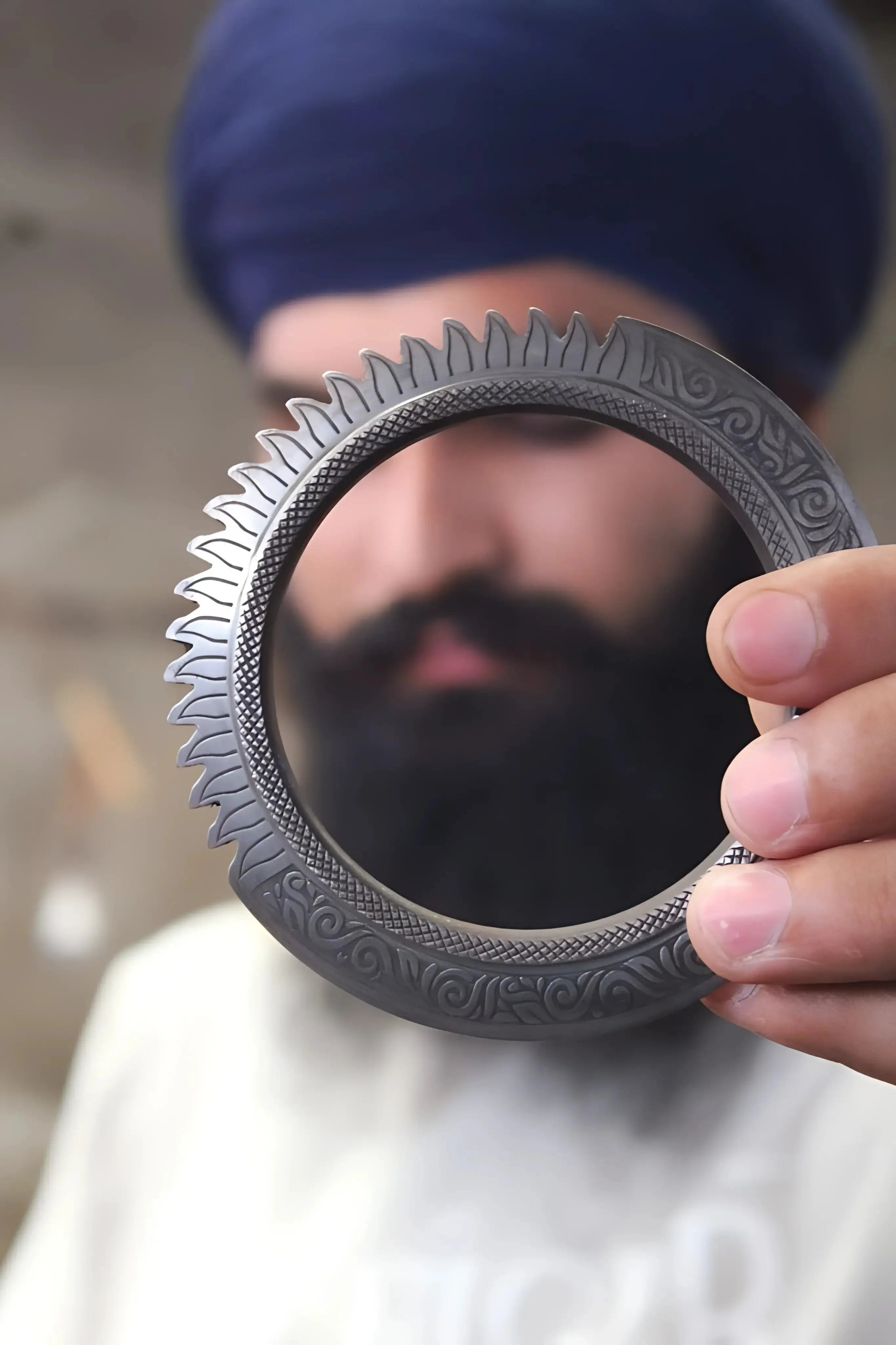
Simple in form, yet powerful in meaning, the Kara is more than just a steel bracelet. It’s one of the Five Ks gifted by Guru Gobind Singh Ji to the Khalsa, and it serves as a constant reminder of humility, unity, and accountability. Whether worn daily by Sikhs or gifted during milestones, the Kara carries both spiritual and symbolic weight that makes it one of the most universal signs of Sikh identity. In this blog, we’ll explore the significance of the Kara — its history, deeper meaning, and how it continues to shape lives in both spiritual and everyday ways. 1. What the Kara Symbolizes The Kara is typically made of steel or iron and worn on the dominant wrist. Its circular shape — with no beginning and no end — is a visual representation of: The infinity of Waheguru (God) The eternal bond between the Sikh and the Guru The constant cycle of action and reflection Wearing the Kara reminds Sikhs to use their hands only for truthful, kind, and just actions. Every time one lifts a spoon, writes a word, or shakes a hand, the Kara is there — guiding and grounding. 2. A Warrior’s Reminder Guru Gobind Singh Ji gave the Kara to the Khalsa as a symbol of strength and moral responsibility. In battle, it served both as a protective item and a sacred reminder not to use violence unjustly. Even today, it represents: Discipline over impulse Connection over ego Strength rooted in compassion 3. Kara in Everyday Life The beauty of the Kara lies in how seamlessly it integrates into daily routines. It is: Worn in school, work, Gurdwara, and at home Passed down as gifts during Dastar Bandi, Amrit ceremonies, and weddings Used as a meditative tool — some Sikhs quietly turn it during Simran (repetition of Waheguru) Its presence is constant, yet humble. 4. Choosing the Right Kara for You At Akaal Accessories, we honour the significance of the Kara by offering different styles for different needs: Material options: Sarbloh (pure iron) – Traditional and spiritually preferred for Amritdhari Sikhs Stainless Steel – Durable and low-maintenance for everyday wear Brushed or Polished Finishes – Choose your aesthetic Other considerations: Size: A snug but comfortable fit is important Engraving: Personalize with “Waheguru,” Khanda symbols, or family names Children’s sizes: Perfect for birthdays or starter sets for young Sikhs 5. Who Can Wear a Kara? While the Kara is part of the Khalsa uniform, anyone can wear it respectfully. Many non-Sikhs wear the Kara as a sign of solidarity, peace, or spiritual reflection. What matters most is intention — wearing it to remember good actions, justice, and truth. Final Thoughts: A Circle That Grounds and Guides The Kara is not loud or flashy — but it speaks volumes. It’s the quiet tap on your wrist during a tough decision. The circle that grounds you in a chaotic world. The symbol that tells the world: I walk with my Guru.
Learn more