

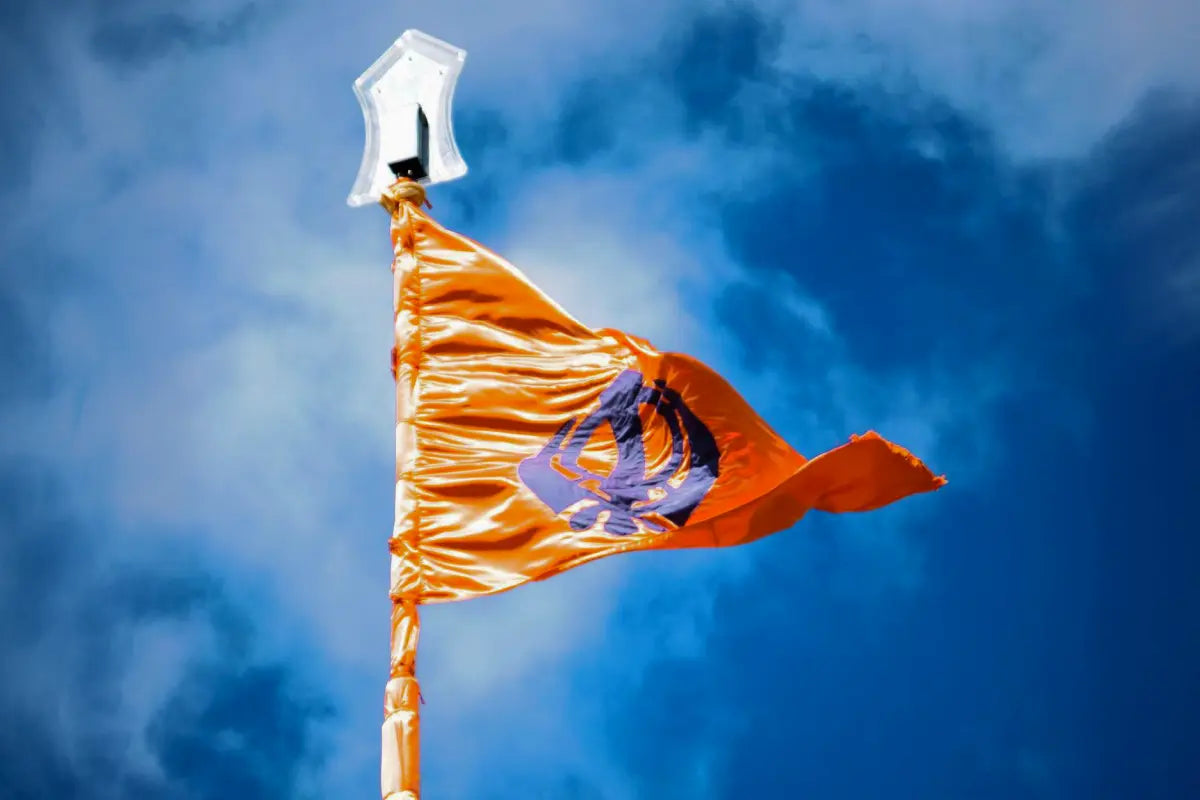
The Nishaan Sahib is one of the most recognisable Sikh religious symbols in the world. More than a flag, it is a sacred emblem that represents faith, unity, sovereignty and seva. Positioned outside every Gurdwara, the Nishaan Sahib stands as a visible declaration of Sikh identity and tradition.
Understanding the significance of Nishaan Sahib in Sikh faith and community provides deeper insight into Sikh heritage, spiritual philosophy and collective responsibility.
What Is the Meaning of Nishaan Sahib?
The word Nishaan means symbol or standard, and Sahib is a respectful term. Together, Nishaan Sahib refers to the revered flag of the Sikh Panth.
The Sikh Flag Meaning
The Sikh flag is traditionally saffron or deep blue in colour.
Saffron symbolises sacrifice, courage and dedication to righteousness.
Deep blue represents sovereignty, discipline and spiritual authority.
These colours reflect Sikh history and the sacrifices made to uphold justice and equality.
The Khanda Symbol at the Centre of Nishaan Sahib
At the centre of the Nishaan Sahib is the Khanda symbol, one of the most powerful Sikh religious symbols.
The Khanda consists of:
- A double edged sword representing divine knowledge and truth
- A circular Chakkar symbolising eternity and unity
- Two Kirpans reflecting the balance between spiritual authority and worldly responsibility
This concept of balance remains central to Sikh belief. Faith must guide action, and spiritual discipline must be supported by moral strength.
The Khanda is also widely present in Sikh accessories and traditional religious items, reinforcing its importance in Sikh identity.
History of Nishaan Sahib in Sikh Tradition
The history of Nishaan Sahib dates back to the time of Guru Hargobind Sahib Ji, who introduced the principle of Miri and Piri. This doctrine emphasised the integration of spiritual leadership with temporal responsibility.
Later, during the formation of the Khalsa in 1699 under Guru Gobind Singh Ji, the Nishaan Sahib became a symbol of sovereignty and collective unity.
Wherever the Nishaan Sahib stood, it represented sanctuary. It signified that langar was available and that all people were equal regardless of caste or background. The Sikh flag meaning therefore extends beyond identity. It represents service, protection and equality.
Role of Nishaan Sahib in the Gurdwara
The role of Nishaan Sahib in Gurdwara tradition remains deeply significant today.
Placed prominently outside the Gurdwara, it identifies the space as one dedicated to prayer, equality and community service. The Nishaan Sahib is mounted on a tall pole and maintained with respect.
Ceremony and Seva
During important Sikh occasions such as Vaisakhi, the Nishaan Sahib is ceremonially renewed. Participating in this seva is considered an honour within the community.
Its presence represents:
- A place for spiritual reflection
- A centre for langar and seva
- A reminder of Sikh principles
- A symbol of unity within the Sikh community
For Gurdwaras and families seeking to maintain this sacred tradition, choosing a high quality Nishaan Sahib ensures that the symbol reflects the dignity and respect it deserves.
Nishaan Sahib and Sikh Identity
Sikh identity is rooted in discipline, devotion and responsibility. Articles of faith such as the Kara and Kirpan symbolise individual commitment. The Nishaan Sahib represents collective belonging.
It stands as a declaration that Sikhs uphold justice, equality and seva.
The Sikh flag meaning reflects a living tradition that connects individuals to the wider Sikh Panth.
Many choose to reflect this identity through authentic Sikh accessories such as the Kara and Kirpan, which reinforce the same principles symbolised by the Nishaan Sahib.
Spiritual Depth of the Khanda Symbol
The Khanda remains central to understanding the significance of Nishaan Sahib.
The double edged sword represents truth and divine wisdom.
The Chakkar symbolises the eternal nature of Waheguru and unity of humanity.
The two Kirpans reflect the balance between spiritual and worldly responsibility.
This layered symbolism reinforces the Sikh belief that faith must be expressed through action, service and moral courage.
The Khanda is also commonly seen in Sikh spiritual items and traditional Sarbloh products, reflecting strength, resilience and heritage.
Nishaan Sahib in Sikh Festivals and Community Gatherings
During major Sikh festivals such as Vaisakhi and Nagar Kirtans, the Nishaan Sahib is carried with honour and reverence. It symbolises unity and collective devotion.
The renewal of the Nishaan Sahib during Vaisakhi represents renewal of commitment to Sikh values and remembrance of the formation of the Khalsa.
These public displays strengthen Sikh identity and also educate wider society about Sikh heritage and tradition.
Preserving Sikh Heritage Through Craftsmanship
Maintaining a dignified Nishaan Sahib requires attention to quality and authenticity. The fabric, stitching and proportions must reflect respect for its sacred status.
Investing in a carefully crafted Nishaan Sahib ensures that Gurdwaras and households preserve this tradition with honour. Authentic design and durable materials help maintain the spiritual and visual integrity of the Sikh flag.
Similarly, traditional Sikh accessories and Sarbloh items reflect the same commitment to heritage and craftsmanship.
Why the Nishaan Sahib Remains Relevant Today
In modern multicultural societies, the Nishaan Sahib continues to act as both a spiritual symbol and a cultural identifier.
For younger generations, it provides a visible connection to Sikh heritage. For the wider community, it represents equality, service and moral responsibility.
Across the United Kingdom and beyond, the Nishaan Sahib remains a powerful symbol of Sikh faith and community unity.
The Enduring Significance of Nishaan Sahib
The significance of Nishaan Sahib in Sikh faith and community lies in its continuity. From the time of the Gurus to present day Gurdwaras, it stands as a symbol of unity, sovereignty and service.
It reminds Sikhs that faith is not passive. It is lived through action, equality and courage.
Honouring the Nishaan Sahib means honouring Sikh history, Sikh values and the collective future of the Panth.


