
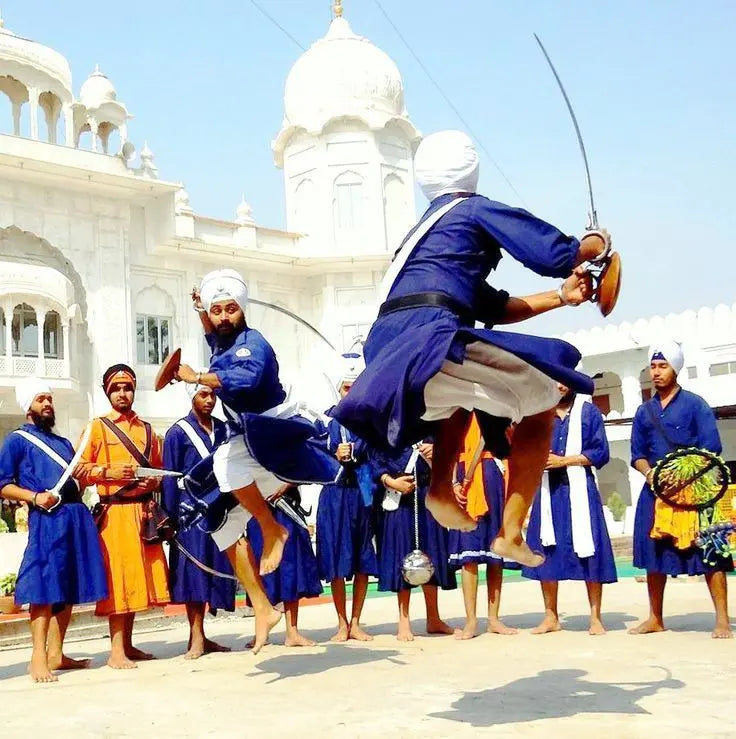
Gatka is the traditional martial art of the Sikhs. Performed at Nagar Kirtans and taught in Gurdwaras around the world, it brings together discipline, faith and the warrior heritage of the Khalsa.
Understanding Gatka gives deeper insight into Sikh history, the principle of Miri and Piri and the place of Shastar in Sikh life.
What Is Gatka?
Gatka is a Sikh martial art built on the skilled use of traditional weapons. In its common modern form, it is practised with a Soti, a wooden stick, and a Farri, a small shield.
It is both a fighting skill and a spiritual discipline. Movement, breath and focus are trained together.
The Roots of Gatka
Gatka grew from Shastar Vidya, the wider science of weapons practised by Sikh warriors.
Guru Hargobind Sahib Ji wore two swords representing Miri and Piri, worldly and spiritual authority. Guru Ji trained Sikhs in horsemanship and arms so they could protect themselves and others.
Guru Gobind Singh Ji carried this further with the creation of the Khalsa in 1699, when the Sikh was called to be both saint and soldier.
The Weapons of Gatka
Gatka training can involve a range of traditional Shastar.
- Soti and Farri, the stick and shield used in sparring
- Kirpan and Talwar, the sword
- Barcha, the spear
- Chakar, the circular throwing weapon
- Khanda, the double edged sword
Each weapon is treated with respect. It is honoured for the values it serves, not for violence.
The Spiritual Side of Gatka
Gatka is never only physical. Practice traditionally begins with Ardas, and many practitioners recite Gurbani as they train.
- It builds discipline, patience and self control
- It strengthens the body as an instrument of seva
- It reminds Sikhs of the duty to protect the vulnerable
- It keeps the heritage of the Khalsa alive
Gatka at Nagar Kirtan and Gurpurab
Gatka displays are a familiar part of Nagar Kirtans, Vaisakhi and Gurpurab celebrations.
Practitioners in traditional dress perform ahead of the procession, often near the Panj Pyare and the Nishaan Sahib. For many people, this is their first experience of Sikh martial heritage.
Gatka as a Modern Sport
Today Gatka is also practised as a competitive sport, with organised tournaments in India, the United Kingdom and beyond.
Gatka academies and Gurdwara classes across the UK teach children and adults alike. For many young Sikhs, it is a way to stay active while connecting with their heritage.
Learning Gatka
Anyone interested in Gatka can usually find a class through their local Gurdwara or a Gatka academy.
- Start with a Soti and Farri under a qualified teacher
- Wear comfortable clothing and keep the Kesh well tied
- Learn the basic footwork and stances before moving to weapons
- Treat every Shastar with care, both in training and in storage
Training is suitable for all ages, and many classes welcome complete beginners.
Gatka and Sikh Identity
Sikh identity is rooted in discipline, devotion and responsibility. Gatka brings these together in movement.
The Kirpan carried as an article of faith and the Shastar used in Gatka share the same meaning. Both represent the duty to stand against injustice.
Many practitioners keep traditional Shastar and authentic Sikh accessories at home as a connection to this heritage.
Caring for Gatka Weapons
Gatka weapons deserve regular care as a matter of respect.
- Wipe blades dry after use and oil them lightly
- Store weapons off the floor in a clean, dry place
- Check wooden Soti for cracks and replace when worn
- Never leave Shastar where they could be stepped over
The Enduring Significance of Gatka
The significance of Gatka lies in its balance. It trains strength and humility, skill and restraint, the body and the spirit.
It reminds Sikhs that faith is not passive. It is lived through discipline, courage and seva.
Honouring Gatka means honouring Sikh history, Sikh values and the warrior spirit of the Khalsa.


